"Chatbot" and "AI agent" are often used as if they mean the same thing, and sales pages don't help. The difference matters, though, because it changes what the system can do for you, how much it costs, and how carefully it needs to be controlled.
What a chatbot does
A chatbot holds a conversation and answers questions. Older chatbots follow scripted decision trees; modern AI chatbots use a language model to understand the question and write an answer, often from your own documents. Either way, its main job is to respond.
What an AI agent does
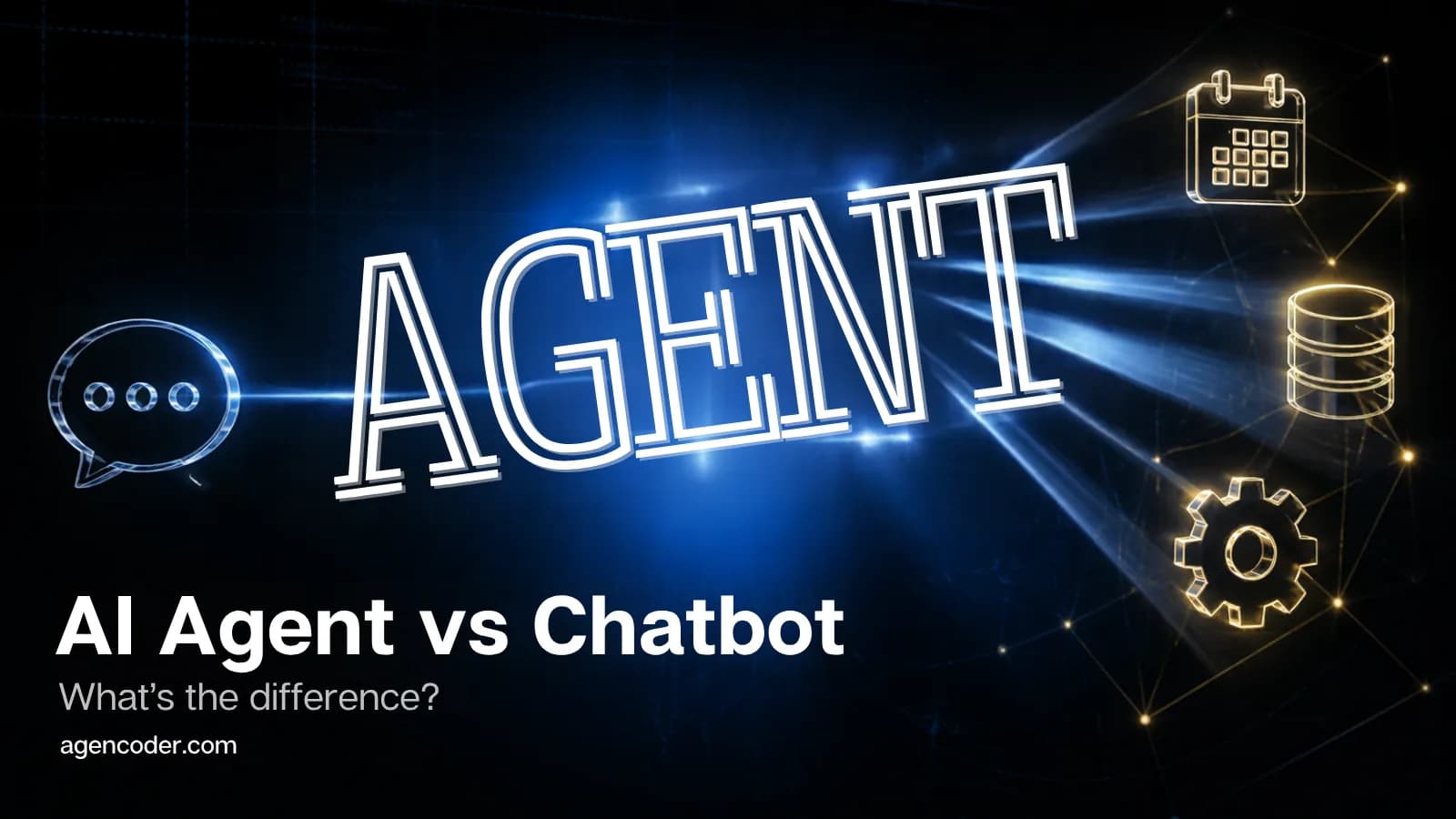
An AI agent works towards a goal. It decides which steps to take, uses tools such as searching a database, checking a calendar or updating a CRM record, looks at the results and decides what to do next. Anthropic draws a useful line between workflows, where a language model follows paths defined in code, and agents, where the model directs its own process and tool use.
A simple comparison
- Main job: a chatbot answers; an agent completes tasks.
- Steps: a chatbot follows the conversation; an agent plans and adjusts its steps.
- Tools: a chatbot may look things up; an agent reads from and writes to other systems.
- Control: a chatbot is easier to predict; an agent needs clear limits, permissions and checks.
- Cost and effort: a chatbot is quicker to build; an agent needs more design and testing.
When a chatbot is enough
- Answering frequently asked questions about services, prices or policies.
- Guiding visitors to the right page or contact form.
- Collecting basic details before handing over to a person.
When an agent earns its place
- Booking, changing or cancelling appointments directly in your calendar.
- Qualifying a lead, creating the CRM record and assigning it to the right person.
- Handling multi-step requests that would otherwise need several emails.
- Internal tasks such as pulling data from several systems into a summary.
Start simple
A common mistake is building an autonomous agent where a predictable workflow would do. Anthropic's advice to developers is to find the simplest solution possible and only add complexity when it clearly improves results. For most businesses that means starting with a chatbot or a defined workflow, and giving it more freedom once it has proven reliable.
Safeguards every agent needs
- Least-privilege access: the agent can only touch the systems and records it needs.
- Human approval for actions that are hard to undo, such as payments or deletions.
- Clear limits on what it may and may not do.
- Logs of every action, so mistakes can be traced and fixed.
- An easy route to a person when the agent is unsure.
If a system can change data in your business, treat it like a new team member: limited access at first, supervision, and more responsibility as it earns trust.